How Art and Listening Can Change Lives: Sara Hickman on Compassion and Local Connection


Hey everyone, it’s Cynthia Zeito and Lynn Kindler! We’re so excited to share this episode with you—an expansive, honest, and hope-filled conversation with our longtime friend and inspiration Sara Hickman. Sara is a celebrated singer-songwriter, artist, advocate, and a true force for community, belonging, and healing in the world. This episode is all about finding and making meaning, even in troubled times, and how our smallest acts can ripple outward in powerful ways.
As your co-hosts, we know life can sometimes feel like one big, messy question. Today, we dig into the details with Sara—what does it look like to keep your heart open when so much feels overwhelming? How do you keep showing up with love, integrity, and creativity, even when the world is hurting? Sara walks us through her journey from global activism to a more community-focused approach, and she shares moving stories about what she’s learned along the way—about purpose, about the healing power of music and art, and the simple sacredness of being present and listening to one another.
We also get vulnerable about the state of the world—the heartbreak, the backward steps, the “cockroaches in the kitchen.” But what stands out is Sara’s continuing faith in the chorus of everyday people coming together locally to lift each other up. We talk about the value of authentic connection in the age of isolation and online noise, and why now, more than ever, compassion is our superpower.
In this episode, you’ll hear us explore:
- How Sara Hickman has shifted her focus from international activism to deeply local community-building, and why that’s so powerful right now
- The dangers of isolation and hostility in our technology-driven culture, and what it means to truly see and hear one another
- The impact of “just listening”—no advice, no fixing, simply holding space for people to be heard
- Sara’s belief in the healing power of music, art, poetry, and creative community, especially when institutions and politics fall short
- Moving firsthand accounts of activism, such as delivering instruments to children in Uganda and supporting immigrants and refugees at the border
- How her own purpose as an artist has always been to make people feel like they matter, even when her industry pushed for something different
- The challenges facing artists—and all of us—when it comes to speaking truth to power and sustaining hope
- The importance of self-compassion, replacing the “negative tapes” in our heads with grace and understanding
- What courage and faith mean in practice, and how “God nudges” and inner guidance keep Sara engaged instead of discouraged
- What brings us joy: family, laughter, community, small-town connections, and favorite bits of music
- A fun rapid-fire round, including dream dinner guests and the songs we wish we’d written
- Above all, why kindness matters, why it feels lighter, and why it might actually be the secret ingredient we’re all searching for
To learn more about and connect with Sara Hickman, visit www.sarahickman.com.
If you loved this conversation, we’d be so grateful if you’d subscribe to Another Way to Think About It on your favorite podcast platform! And please, share this episode with someone who might need a new way to think about it, too. Stay open, stay curious, and keep showing up with heart—we’re all in this chorus together.
Cynthia Zeito [00:00:07]:
So I'm going to just start off just saying, welcome back to Another Way to Think about it podcast where we get really curious about life beyond the obvious and explore life's messy questions with humor, heart, and a willingness to just say things differently. Just try it. I'm Cynthia.
Lynn Kindler [00:00:27]:
And I'm Lynn. And today we're delighted to welcome someone who has spent her life creating not just music, but community, connection, beauty and belonging, and art and writing books. Sara Hickman is an award winning singer, songwriter, artist, storyteller, activist, entrepreneur, and community builder, and more. For decades, she's been making music, supporting causes. She believes in uplifting other artists and finding creative ways to bring people together. What fascinates us most is that Sara seems to live at the intersection of creativity, compassion, courage and curiosity. And that's exactly the kind of conversation we love to have here. Sara, welcome.
Lynn Kindler [00:01:10]:
We're so glad you're here.
Sara Hickman [00:01:11]:
Thanks for having me. Yay.
Lynn Kindler [00:01:14]:
Yay.
Cynthia Zeito [00:01:15]:
Finally, after all this. Hey, Sara, I have a question for you. I want listeners to, you know, know that you guys have known each other for a while, but, you know, Lynn, carry it from there.
Lynn Kindler [00:01:31]:
Okay. So many years ago, we found ourselves connected through a remarkable spiritual community here in Austin. And I think it was just Austin through a book by our very good friend Michael Blair and Roy Spence called the Amazing Faith of Texas. And I think you can still get it out there. I remember seeing it at the bookstores and you could see a gorgeous photo of our Sara Hickman. Life has taken us in different directions since then, but one thing I've always admired about you is the way you've moved through the world. Creating things, music, art, community, conversations, opportunities for people to feel seen. Sara.
Lynn Kindler [00:02:10]:
And what strikes me now is that while so much has changed in the world, it's. You still seem deeply committed to hope, creativity, and human connection. So maybe that's where I'd like to begin. What has life been teaching you lately?
Sara Hickman [00:02:28]:
Well, that's a. That's a big question. Between what's happening with the United States of America and the battle to save our democracy, plus being a caregiver for my mother, who is 89 years old and moving to a small town in Texas and learning to create connections locally compared to worldwide like I used to try to do, I think I've learned that now that I'm 63, I can still create hope and I can still create connections. But my focus is locally because I believe that if I'm working locally to uplift others and again, bring hope through our community connections, and other people are doing that locally around the world, then we are creating a chorus of hope. It's not just.
Lynn Kindler [00:03:36]:
I love that.
Cynthia Zeito [00:03:37]:
Thank you.
Sara Hickman [00:03:38]:
Yeah, so I'm trying to create a chorus in my own community. And I don't just mean like singing. I mean by all of us coming together to be a force for good. And so that's what I've been learning and focusing on and trying to balance the heartache of ICE detention and.
Lynn Kindler [00:04:04]:
Yes, ma', am.
Sara Hickman [00:04:05]:
The abuse of the Haitian people, the abuse of women, the Epstein files, having the maniac in the White House with all his ill behind him and trying, trying not to lose my mind. Because it seems it used to feel like every 10 steps forward, maybe I took two steps back. Now it seems like I take two steps forward and 10 steps back. And that can be overwhelming and frustrating and heartbreaking and I can get really caught up in that. And I'm trying to remember, just stay local, stay local and do what I can within my own community.
Cynthia Zeito [00:04:46]:
Question on that. I love that. Sara, do you think that we, this population here, we're starving for attention more than information, so to speak?
Sara Hickman [00:05:00]:
You mean like, for example, like how influencers are the new thing over the last few years? It's more of a me, a lot of me, me, me, me, me, me. And our, our, our ill equipped leaders, so to speak, are me, me, me, me, me. Yes, I think, I think that kind of selfishness has always been there and not bad mouth influencers. There's some great influencers out there, but I think the harm of technology is isolationism and people think it brings us closer. But the amount of suicide attempts, suicides actually happening, the bullying of the LGBTQIA community, especially trans people, trans children, the bullying of women on how we look, how we, what we wear, and the sexualization of young girls and boys, but mostly girls, is more prolific, I think now than ever, because people have access to bullying in ways they didn't before. And people feel justified in being mean and that they. And because some of our leaders are mean, they feel like, oh, then that's okay if I'm mean. And that makes me not just unhappy, it makes me furious because I felt like, especially during the Obama years, we were getting to a place of progress where the diversity was so rich and people were starting to understand and be more accepting, at least on the surface.
Sara Hickman [00:06:41]:
And as we know, since, you know, who came to office, it seems like the undergrowth of our society that was clinging to bullying and mean spiritedness and racism and sexism and ageism, and xenophobia, it's flip flopped. Now they, they're ruling our country and our world and destroying all the good progress we made. So if you mean in that light, Yes, I, I, I worry about the me me.
Lynn Kindler [00:07:12]:
So, Sara, what if, what if, you know, like, I just got this gross image, y', all, but of cockroaches on, you know, something within the light. So what if, what if all this, the good stuff that's happening right now is all the dark is coming out so that we can see it and now the big light, you know, like the chorus of we all over the globe to shine it. I don't know.
Sara Hickman [00:07:39]:
You know, yeah, there is a benefit to seeing who's engaged in white nationalism and the KKK and. But what's scarier is all the dark web stuff that we don't see. I know that's true. The access that men have to hating women and feeling justified in abusing and murdering women, that's terrifying. But, you know, I think that's a good analogy of how the cockroaches are in the kitchen, you know, so to speak. But there's a phrase that I learned from a woman named Guru machidasananda. I went to her ashram several years ago in the Katzkalam, and she talked about the word enthusiasm and how when you break it down into the Latin, in means to have inside, and theos is God. So she was talking about when we have enthusiasm, the light of God is shining from us and that attracts people to us.
Sara Hickman [00:08:40]:
So for those of us that are enthusiastic about kindness, about community, about caring, about lifting others up, that's what we have to cling to, is that inner light that we shine and not let other people cover it or change it or alter it or make us feel guilty for being happy and being a source of light and goodness.
Cynthia Zeito [00:09:04]:
That's right. I love that. That's beautiful. Would you think, also with how you've been in, in the community, music community, art community, just the community in general, do you believe that that can heal things that obviously politics and institutions can't? What? We're just talking about the lie, but do you think that art music community can do that?
Sara Hickman [00:09:31]:
Oh, yeah. I mean, art, music, dance, poetry, theater, independent film, all of these things are accessible to anyone. And, you know, having the Internet is powerful in that you can upload a song you wrote or a poem you wrote or an indie film you made. And so, of course, art always reflects back what's going on in society. That's why fascism always destroys the poets and the artists first. That's why they shut down journalism. That's why. Because writers and singers and poets and dancers, we're the ones shining the light out to give people hope and to remind people this is good, this is bad, if I may be that simplistic.
Sara Hickman [00:10:23]:
So, you know, I was telling somebody, I've never been afraid to be on stage, and I've had stalkers, I've had death threats, but I never felt afraid. Now the. This society feels darker and meaner. And I do feel afraid when I post a song that has to be, that is about how Trump is evil and wrong, or I sing about a song about Eugene Goodman, the Capitol Police officer that distracted all the crazy white men on January 6th and saved our representatives. You know, some of the feedback I get from that can be unnerving. But I feel it's important to continue to speak out. And I know that there's a lot of musicians, songwriters that are doing that. And so I.
Sara Hickman [00:11:23]:
I worry, you know, about speaking truth to power, but that doesn't stop me, and it doesn't stop a lot of other people from making, whether it's posters to singing a song from speaking truth.
Lynn Kindler [00:11:38]:
Thank you. And, Sara, you know, one of the things that I wanted to hear from you, I think that there's a connection. I mean, obviously, by the way, I always say Yogi Bear type things that are obvious. David has a little book that are called Lineisms of All the Things I Say that seem really profound and they're not. But anyway, so I want to know what you believe is your purpose and also how your music intersects with that. Because my experience of you with music is you are such a love girl. I mean, you are loving the whole audience. You're giving out so much energy, which.
Sara Hickman [00:12:24]:
Okay, well, that's two questions. So let. Let's stop there. Yes. I've always known, since I was six years old that. That I was given the intention, it was laid on my heart spiritually, to make music and to make people feel like they matter. I've never questioned that. I know when I got into the professional aspect of the music industry, there were people that wanted me to write differently, to write more fitting pop songs for a mass audience.
Sara Hickman [00:13:05]:
And my feedback was always, well, I can only write Sara Hickman songs because I'm Sara Hickman. And so, you know, there's a movie, Mr. Holland's opus, and that movie really struck a chord with me because Richard Dreyfuss plays the main character, and he's a composer and he works in a high school as the base band leader. And he has this dream, though, that someday his compositions will be played by major orchestras around the world, but life keeps getting in the way. He has a deaf son who he goes through some stuff with his wife. And at the end though, he walks in and all of his ex students, so they're all different ages and colors and sizes of people, are on stage playing one of his orchestrations. And he realizes that his dream of being famous wasn't as important as his dream of touching people's hearts and giving people the power of their own gifts. So I identified with that because I'm not mega famous.
Sara Hickman [00:14:15]:
I never made it to the greener side. I made it just enough that I could continue to make music worldwide and. And make records and tour. And my connection with my audience was always first and foremost more important to me than being famous. And I'm really grateful to that because I still have people who follow me that started way back in the late 80s, whose kids and their grandkids love my music because they are so enamored by me, which I can't believe. So my audience may be small, but I'm really grateful to them because they've given me a beautiful life for me and my family simply by my making music. So I have my purpose. I have no doubt, and I hope I continue it until my deathbed, you
Cynthia Zeito [00:15:06]:
know, when I was first. There you go. I hope you do that too. Please do. The first time I heard you, when. When I really started deeply meditating in 1990, 94. I mean, I meditated before then, but not seriously and heard your music in our meditation because the practice that I was utilizing, they use music to move you, you know, internally, to let go and to feel. So, yeah, that was when I was first.
Sara Hickman [00:15:36]:
Cool. Isn't that awesome?
Lynn Kindler [00:15:38]:
Yeah. Yeah. But Sara, what Cynthia doesn't remember is in 19, I was at Texas Monthly, so 19, I guess 1990, Cynthia, it might. Might be true. You. She was working for appscap or however you say it in Dallas. Yep. And that was when all kinds of.
Sara Hickman [00:15:59]:
Wait, wait one second. Let's just explain. For anybody that doesn't know what ASCAP is, there's ascap, tmi, and they are both collection companies that retain the royalties of singer songwriters. So Ask out is one of the two. There you go. I'm bmi.
Lynn Kindler [00:16:18]:
Well, she couldn't say enough good things about you, so she bought that album that has the illustration of you on the front of it.
Sara Hickman [00:16:26]:
Oh, that's equal. Scary people. My first album.
Lynn Kindler [00:16:28]:
Right. And I Remember hearing your voice and just being like, oh, my God, you really have it. Yeah. You bring your whole self. Yeah.
Sara Hickman [00:16:40]:
Thank you.
Lynn Kindler [00:16:42]:
So you seem deeply committed to listening. I know. You are listening, serving, and creating spaces where people feel seen. Where does that come from?
Sara Hickman [00:16:52]:
Well, you know, it always starts with the artist. So, of course, as a child, I wanted to be seen and I wanted to be heard. And I think my. My paternal grandparents, who were both musicians, they really kind of plucked me out of all the. All the cousins because I played guitar early on. I. I got my first guitar at six, and my parents would drive us every summer to go see my grandparents in Arkansas and Atlanta and Heflin, Alabama, where my great great grandparents lived. But in.
Sara Hickman [00:17:30]:
In Rogers, Arkansas, my grandparents. My grandmother played piano, and my grandfather played saxophone. And I would sit on the stool on the bench with my grandmother, and they would play all these songs from the 20s, 30s, 40s, 50s, and 60s, because they were both in a big swing band. And I could talk more about their. Their background because it's really fascinating. But here I was 6, 7, 8, 9, 10 years old, and I would play my guitar with them while my grandpa was playing saxophone and my grandmother was playing piano. So I was doing five through two, eyes of blue and tall and tan and young and lovely. So I was playing jazz standards with two great jazz musicians and not knowing that's, you know, that I was getting this wonderful education vicariously by just sitting and listening and watching them and.
Sara Hickman [00:18:24]:
And taking chances. They never told me I. I did anything wrong. So if I hit a clunker of a chord, we just kept going. And that also taught me that when you're on stage, you get. You make a mistake, just keep going. It doesn't really matter. So they gave me a lot of freedom and a lot of gifts as a child.
Lynn Kindler [00:18:42]:
That's a great metaphor for life, too. So something that got my attention in your bio that I did not know about you, in reference to your work and service is as the creative outreach director at St. Cecilia's Episcopal Church, where you do dedicated listening sessions. And you said that you simply listened to an individual for 45 minutes. No advice, no feedback, no judgment. What is that?
Sara Hickman [00:19:11]:
Well, I. I don't remember how I first heard about it, but before the pandemic, I thought it would be fun to do a listening session in downtown Austin, Texas. So it was me and three or four other women, and one of them was Muslim, and she had her head scarf on. And we took lawn chairs, and we sat in front of one of the businesses, after getting their permission, of course. And we had signs that said simply here to listen. And people would walk by and go, what is this? And we'd say, we're just here to listen. If you want to just unburden yourself or just talk, we're just going to listen. No advice, no feedback, no judgment.
Sara Hickman [00:19:55]:
So we sat out there for about eight hours and we had all kinds of people, kids and couples and individuals. And we would just sit and listen and, and you know, at first people would be awkward, like waiting for my feedback or me to say something. And once they got comfortable in that silence of really getting to just speak, they would in, you know, just tell us all kinds of stuff. And one of the things that really stuck with me, there was a big burly guy walking by and he saw our friend who was Muslim and he said something a little derogatory and she just took it in stride. And then he, he asked her more about what it was and she said, I'm just here to listen. Well, he sat down for like almost two hours. They engaged. They actually ended up talking about the Muslim religion.
Sara Hickman [00:20:51]:
And by the time he left, they hugged and he, you could tell he was a changed man because we had given him the space to be heard and he got to say his stuff and she heard his stuff and then he gave her space back to talk. So they ended up having a dialogue, which was really fantastic. So what I do with St. Cecilia's is the same thing, except it's just me. I just sit there and people can make an appointment and come and just talk for 45 minutes. And that's what it is, just listening.
Lynn Kindler [00:21:27]:
Wow, that's huge. That's huge. Wow.
Cynthia Zeito [00:21:31]:
It's impactful, you know, and now Father
Sara Hickman [00:21:34]:
Bill does it too now. So he'll, he'll sit and just listen.
Lynn Kindler [00:21:40]:
So, you know, what's the difference between being heard and being fixed?
Cynthia Zeito [00:21:45]:
Oh, that's a good one. That's.
Sara Hickman [00:21:47]:
Well being. I'm not, I'm not capable of fixing you. The only person capable of fixing you is yourself. So, you know, I think that's a fallacy that you can go somewhere and get fixed emotionally. That's, you know, that's what therapy's for. It's a, it's a type of listening. If you have a really good therapist, they listen and then they ask you questions back that you have to answer. They don't give you answers.
Sara Hickman [00:22:15]:
And that's a healthy form of listening. And you know, we live in a fast paced society and, and our brains aren't meant for how fast things are going. And our brains aren't meant to have more than 10 friends. And the fact that, you know, I have 14,000 people following me or whatever, I'm not friends with 14,000 people. The reality is I'm friends with 10 awesome human beings. And then beyond that, I have a community of friends, up to 100, perhaps. But, you know, for me to change, I have to look inside and I have to take the. The judgment, the self judgment out, and I have to replace that tape with love and support for where I'm at and who I am.
Sara Hickman [00:23:05]:
And that's all I can do every day, is take the negative tape out, put a positive tape in, and eventually you don't have as many negative cassettes. You just have a positive. And then you don't even have to do that because you're carrying yourself with grace and compassion. And compassion is the biggest word we can give to ourselves. Right. And a lot of people can't because they've had PTSD or they have had trauma or they've had abuse. And it takes a long time to get through that muck, to get to where you can have compassion for yourself and love yourself just where you're at.
Lynn Kindler [00:23:39]:
That's beautiful. Cynthia, you had a question. I think about. It was something about, do you think art, music, and community.
Cynthia Zeito [00:23:50]:
Yes. Yeah, yeah. Do you think that art, music, and community actually can heal things that politics and institutions can't? And I know we just addressed this a minute ago.
Sara Hickman [00:24:05]:
Well, I think. I think when. When institutions and policy and the politicians that make good policy include the arts, I can say yes, because I've been a music and an art therapist, and I have seen what engaging someone in art and music can do for their soul. You know, in fact, I'm really grateful to my parents because they were both visual artists. And our house was full of everything you could dream of. Pens, pencils, paint, clay weaving. And we were constantly. We were constantly making stuff.
Sara Hickman [00:24:46]:
And when I got an awareness that we were kind of the oddballs on the street because no one else's parents in my neighborhood were doing that. So after a while, kids would come to our house because I was producing plays. I would. Had my little typewriter and I would write up a play. And then my mom would help me make curtains on our back. Por and I would get. She would find refrigerator boxes and we'd cut them out so I could make trees and, you know, whatever set stuff I needed. And then I teach the kids their parts, and then we'd put on a play for the moms because the dads were all at work.
Sara Hickman [00:25:15]:
And, you know, I'd even draw tickets, and we'd sell the tickets to the moms for 10 cents. And then we'd raid our kitchens, and we'd put snacks out, and then they would get to go to our concession stand and buy our snacks. And then we'd. All kids, we'd take our money and we'd get on our bikes and ride to Dairy Queen and have a treat. You bet you. My kids grew up in that same kind of environment because my parents instilled that in me. And so, like, we had a room where the walls were painted with blackboard paint, right? So the kids could draw with chalk, and their friends could come over, and we had a little tiny art table that had paints and pens and colored pencils and paper, and kids could just go over there and start drawing. They didn't have to ask for permission to be creative.
Sara Hickman [00:25:58]:
They just were creative. And now my kids are super hyper creative. And. Oh, yeah, I. I think the sad part in the world is that we give all this money to sports. No shade on sports for our bodies. But when we cut funding for the arts and languages, we lose so much because we learn. And it's been proven over and over that art and math and music are great coordinated.
Sara Hickman [00:26:25]:
Right. They're parallel, of course. So when we give. When I would go in and do Art Matters with Austin isd, which was a great program, and. And I remember teaching about Andy Warhol or teaching about the difference between Manet and Monet. You know, kids loved it. They. They.
Sara Hickman [00:26:43]:
And the sad part was I had 45 minutes to explain an artist. Give an example by drawing on a whiteboard or drawing or showing slides or whatever, and then helping the kids create their own version of a Monet or a mon. Whoever. And then we would show it out in the hallway. You know, art takes space and time. And so when we cut funding, when policy and. And politics and institutions cut funding for the arts, they're really cutting hearts. You know, they're.
Sara Hickman [00:27:11]:
They're cutting a future of a child's imagination. And our imaginations are what help us build policy and institutions and communities. So, yeah, big loss when we lose the arts.
Cynthia Zeito [00:27:24]:
You know, many. Many of the projects that you're involved in are working in, like, helping people. So on that, what responsibility do you think that artists have to their communities?
Sara Hickman [00:27:41]:
Well, you know, I think. And it's not just artists. Like, there's a woman in Austin named Lynn Brooks, and she at some Point realized that all those plastic recorders the kids learn for one semester were being thrown away. And so she started going around to AISD schools and gathering these plastic recorders in the little cloth bags they come in and she cleans them. And so for like, zap. The first time I went to Uganda, she gave me 180 recorders to take to these children in Uganda. And when I passed them out, as life goes, it was exactly 180 children. And I will tell you, kids in America, not all children take it for granted the things they have.
Sara Hickman [00:28:30]:
Everything's disposable. These children in Uganda, when they got these recorders, it was like someone had handed them gold. They were walking around trying to figure it out. They were excited that another child's name was written on the clock back. Oh, look, Auntie, I got the. I got the recorder from Cindy and Austin. Look at, look at the flowers she drew. They were so enamored.
Sara Hickman [00:28:53]:
And by the end of the day, they were playing songs. And. And I will tell you why that's important, because I. The last time I went to Uganda, in 2023, which was 10 years later, a young man came up and was playing a recorder like Miles Davis. And I couldn't believe. I was like, you are fantastic. And he says, auntie, do you remember me? And I said, no. And he says, it's me, Jeffrey.
Sara Hickman [00:29:19]:
You brought me the recorder 10 years ago. And I had walked around a corner 10 years earlier, and he was there playing Amazing Grace. He'd worked on it all day and it was beautiful. Now, I had people who in my community donated saxophones, flutes, trumpets, smaller, you know, tangible items, and I sent them back over to Uganda. And Jeffrey has those instruments so he can teach other kids. Because I said, you need a saxophone, Jeffrey. So now he has. So, yes, as an artist, it's important that I speak up and I get involved and I engage others to help in these missions.
Sara Hickman [00:29:56]:
But just everyday people who may not be artists, who are helping other people become artists by thinking with intention, like Lynn Brooks did, and gathering these things that were disposable that mean so much to other children in another country that they couldn't obtain. So it takes. It takes a village to say that phrase. It really does. It's not just the artists. It takes people open to innovation and ideas that want to help artists, but also help future generations on becoming artists.
Lynn Kindler [00:30:31]:
God bless.
Cynthia Zeito [00:30:32]:
I mean, what keeps you. What keeps you engaged, Sara? Rather than, like, discouraged.
Sara Hickman [00:30:39]:
And I get discouraged. I trust me. But you know what? I have faith. I Have. And I get God messages all the time. Nudges or muse, whatever you want to call it, I, I, I. And I've. As.
Sara Hickman [00:30:58]:
I've. As I've aged, as I've gotten older, I don't ever question Those nudges because 99.9% of the time, they come true. So it's not my place to question it. You know, when. When God told me to go to Romania, I went to Romania. Did I know what I was doing? No. But I went and I had an amazing experience, you know, when I was talking to Lynn Dobson and she was going on about Africa, and I said, oh, I wish I could go to Africa with you. And she said, well, why don't you? And I was like, well, because I'm a musician.
Sara Hickman [00:31:27]:
I don't. I don't have, like, kind of disposable funds. And she's like, well, come on. And then, you know, that. That God nudge led me to produce an album with her, with the children's choir. And it helped Lynn Brooks come forward and say, here's these recorders. Can you take them? And I said, yes. You know, it unlocked all these other things that I.
Sara Hickman [00:31:48]:
I think God wants me to do. And again, it doesn't have to be a big, splashy thing where I win an award for it. It's. It's a. It's more of. Of me sharing the gifts that I've been given to help other people unlock their gifts. And if I don't do it, who am I not. Who am I not helping to.
Sara Hickman [00:32:09]:
To unlock, you know, and that makes me sad. I want everybody to live to their fullest potential. Did that answer your question? I hope so.
Cynthia Zeito [00:32:18]:
Yeah.
Lynn Kindler [00:32:19]:
So. Oh, yes, Sara, that's. You have so many stories. So what does courage look like today to you? What is being courageous?
Sara Hickman [00:32:31]:
You know, being courageous is stepping right into it. I remember. Yeah. Being courageous is recognizing that. That our lives are temporary. You know, we are so invested in how important we are as self. Which is true, you know.
Lynn Kindler [00:32:51]:
Yeah.
Sara Hickman [00:32:52]:
But once I'm gone, I'm gone. It's. It's not. There's nothing else I can do. So if I have to take a bullet for somebody, but it helps 10 other people move forward, then. And, and experience freedom, true freedom, then it's worth it. You know, I. I just read today how I just took a nun in McAllen, Texas, who was.
Sara Hickman [00:33:18]:
Her crime was driving to church.
Lynn Kindler [00:33:21]:
Oh, come on.
Sara Hickman [00:33:22]:
And so it made me think about, oh, I don't know, maybe seven years ago or something like that. Well, during the first Trump administration, that's when it happened. My friend Kathy Carr and me and Robin Rather and a group of women drove to McAllen, Texas. I went online and said, I'm going to McAllen to help people who've been detained who are being released into the care of Mother Norma and all these Catholic nuns, probably including this woman who was arrested today by ICE because they are helping people who are being released from detention. So when I said that online, I raised $10,000 in an hour. And I took that money because people trust me, and I take their trust very seriously. We drove to McAllen, and it was my first time to go into a. Oh, what's the name? Not Walmart.
Sara Hickman [00:34:16]:
What's the other thing that people like? Target? No, no, Sam's.
Lynn Kindler [00:34:21]:
Sam's. Costco.
Sara Hickman [00:34:24]:
Costco. I'd never been in a Costco, and Kathy had a membership, so we went in Costco. I bought $10,000 worth of giant things of corn and beans. We bought bags of rice. We bought tiny little shoes and socks for children. We bought T shirts for adults. We bought. I.
Sara Hickman [00:34:40]:
We had a train with all these rolling platforms just covered in food and clothes.
Lynn Kindler [00:34:47]:
I love it.
Sara Hickman [00:34:47]:
And paid the cash, paid the $10,000 out went to Sister Norma, Mother Norma, and all these nuns. We were. That some. I think we were there for three or four days. We were seeing people who were exhausted, who had arrived in this country after walking thousands of miles in the same clothing they had worn all that time. They didn't get new clothes in these detention centers. They were really hungry. Most of them didn't speak English.
Sara Hickman [00:35:16]:
I ended up, you know, we were making food for them. They got to have a shower. They got to spend the night on a pallet. They got to go to different sections in this warehouse to pick up clothes and socks and shoes and hats if they needed them. And they all got a bus ticket, and they all got a sign that to carry on this bus ride to wherever they're going that said, I don't speak English. Please help me get to. And we fill out the name of the city and the name of the contact and the phone number. And I will tell you, I ended up working with the children.
Sara Hickman [00:35:45]:
And a lot of these parents were just worn out. Like, I've never seen such worn out people. And they were just falling asleep. And I was trying to talk to these children in Spanish and drawing with them. And there was children, I had never seen this, who were so gone. I had one little boy who was sitting at a table like this for an hour. I, I, I got under the table and was, look, laying on the floor, talking to him, looking up at him, and it was. I don't know what he experienced, but it was horrific.
Sara Hickman [00:36:19]:
And it. And at the end of the hour, I got a really small smile, and I drew him a horse. And, you know, the, the trauma, the trauma of what people are enduring is horrific. Anyway, I don't even know what your question was, but that's courage. We walked into it, and we, we did our best with the, with the funds we had and the, and we tried to help all of those nuns, God bless them. They were working so hard, and they were seeing up to sometimes 800 people a day come through this warehouse in McAllen, Texas.
Cynthia Zeito [00:36:55]:
What brings you the greatest joy these days, Sara?
Sara Hickman [00:36:59]:
When my kids are happy, I'm happy.
Lynn Kindler [00:37:01]:
A.
Cynthia Zeito [00:37:02]:
Okay, we're. We're gonna do something. You want to do the fun round, Lynn? How about if I do something?
Lynn Kindler [00:37:07]:
Yeah. Okay.
Cynthia Zeito [00:37:09]:
Sara.
Lynn Kindler [00:37:10]:
Rapid. These are lighter questions. Rapid fire. Just. First thing that comes to your mind. Favorite, favorite thing about Smithville, everybody.
Sara Hickman [00:37:21]:
Oh, wait, let me tell you one more quick thing. So today I was at the post office, because I know everybody at the post office, Bernarda and Jenny. And as I was leaving, Jenny goes, love you. And I was like, love you, too. And I thought, that's what I love about Smithville is I know the mayor. I know the, the chief of police. I know most of the people on the police force. I know the librarian.
Sara Hickman [00:37:40]:
I know. You know, it's like knowing people and knowing their names and knowing that you could express love is the best.
Cynthia Zeito [00:37:48]:
It's sweet. Sara, I think our producers from Smithville. Is that right, Lynn?
Lynn Kindler [00:37:53]:
I don't know, honey.
Cynthia Zeito [00:37:54]:
I think she is.
Sara Hickman [00:37:56]:
Okay, next question.
Lynn Kindler [00:37:57]:
Okay. Song you wish you had written?
Sara Hickman [00:38:02]:
Oh, I wish I'd written this song. Well, Cassandra Wilson does a cover of Harvest Moon by Neil Young, and it's the most beautiful thing you've ever heard. And Lance and I got married to that version. Unbelievable. I wish. I wish I'd done her version of Neil Young's song.
Lynn Kindler [00:38:21]:
Okay, all right. Who would you love to have dinner with?
Sara Hickman [00:38:25]:
Jeff Coblem. Jeff Goldblum. Jeff Goldblum. And Mariska Hargitay. And. And wait, wait, wait.
Lynn Kindler [00:38:33]:
And.
Sara Hickman [00:38:33]:
And Angie Harmon. She's my new favorite. Those three.
Lynn Kindler [00:38:37]:
Very, very cool.
Sara Hickman [00:38:37]:
And of course, Michelle and Barack Obama.
Lynn Kindler [00:38:40]:
Oh, my goodness, y'. All. Let's have a dinner party. Sara, what are you curious about right now?
Sara Hickman [00:38:47]:
I'm curious how to stop fascism.
Cynthia Zeito [00:38:49]:
How to stop what?
Sara Hickman [00:38:52]:
Fascism.
Cynthia Zeito [00:38:54]:
Oh, there you go, girl.
Sara Hickman [00:38:57]:
Yeah.
Lynn Kindler [00:38:57]:
Okay. What makes you laugh every time?
Sara Hickman [00:39:02]:
Lance. Lance? My husband makes me laugh really hard. Yeah, he's really funny. I don't know that people know that about him, but he. He can make me laugh till I pee my pants. Like, he's really.
Lynn Kindler [00:39:15]:
Oh, that's awesome. I love that. So, Cynthia, take it out, baby. Okay, go ahead and do the closing questions.
Cynthia Zeito [00:39:23]:
We're just. Sara, we're just going to wind it down now. One thing I want to ask you before we go into this is what would you like people to remember? Just remember.
Sara Hickman [00:39:35]:
You mean about me or you mean about life in general or whatever that means to you? I would like people to remember that it's just as easy to be kind as it is to be mean. So just freaking be kind. What's wrong? Kindness is cool. Kindness is. Kindness is the fajizzle, man. It's the best. And you leave feeling lighter when you're kind. When you mean, you leave feeling really bad.
Sara Hickman [00:40:04]:
So
Cynthia Zeito [00:40:06]:
kindness tattoo.
Lynn Kindler [00:40:10]:
That's awesome. I love it. Well, this is a great place for us to end. And, Sara, thank you so much for giving us your beautiful heart and time. You're just lovely. This has been inspiring, thought provoking, and deeply human. We appreciate not only your music and your creativity, but the way you continue creating spaces where people feel seen, heard, and connected. And by the way, I'm going to challenge you to do a really pretty Sara version of Harvest Moon, please.
Sara Hickman [00:40:47]:
The perfect version is already out there. I'm telling you, when you hear it, you're going to cry. It's magnificent. It really is. It's so profound.
Lynn Kindler [00:40:57]:
You and Lily do the. My favorite version of the tears song. That is my favorite version ever.
Sara Hickman [00:41:05]:
Thank you. Thank you. And I have to give a shout out to my friend Gretchen Phillips because she does the high keening note in it. It's so beautiful.
Lynn Kindler [00:41:12]:
Oh, yeah. Oh, that's cool.
Sara Hickman [00:41:14]:
And I produced that, so I'm really proud of it. Thank you.
Cynthia Zeito [00:41:17]:
Thank you very much. So you can find links to Sara's music, upcoming performances, podcast, community projects, and more in our show notes down below. And if you enjoyed today's conversation, be sure to subscribe down below. Follow and share another way to think about it with somebody who might enjoy or really need at this time thinking differently alongside us. And as always, stay open, stay curious, and keep thinking differently.
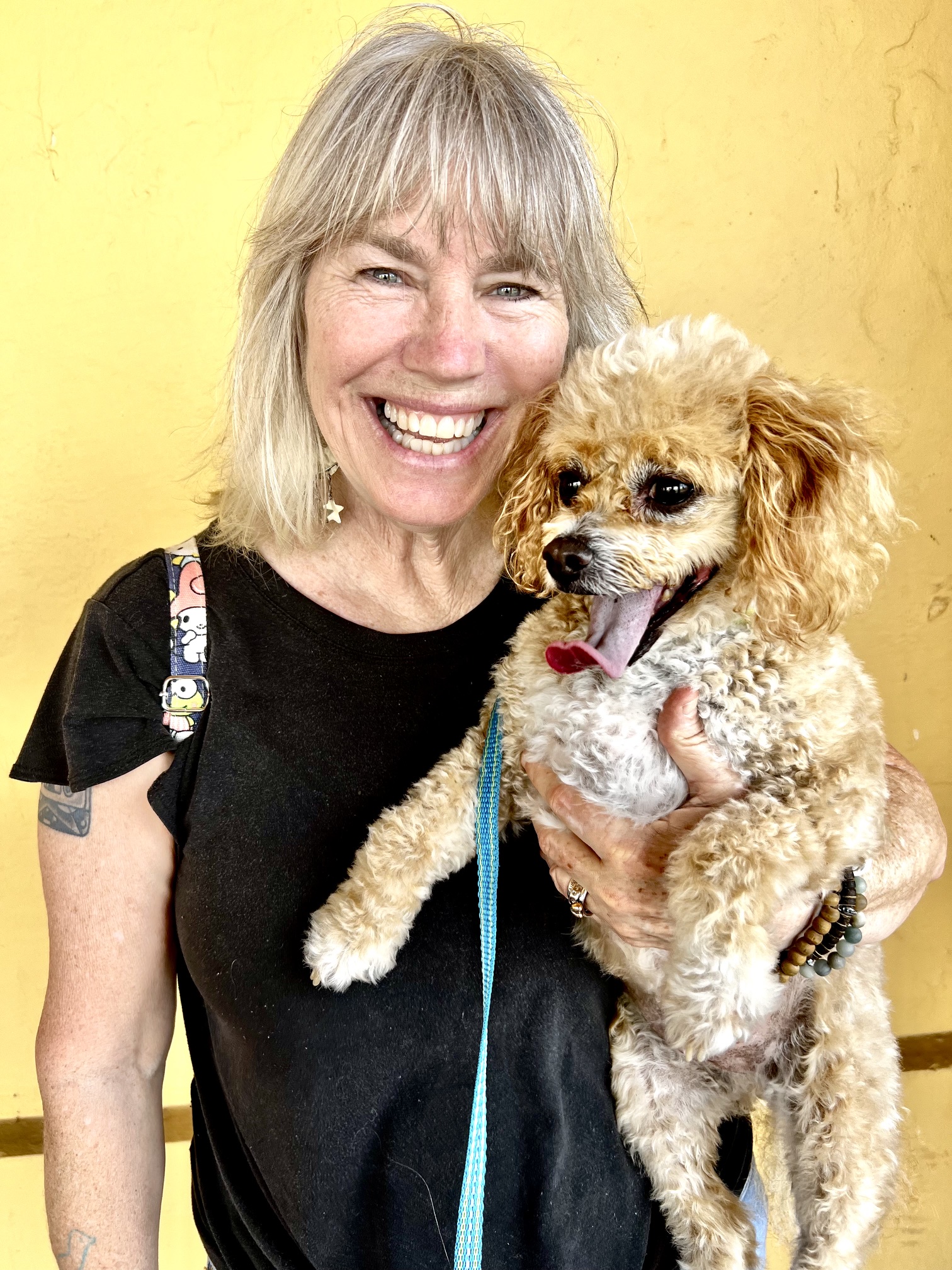
Sara Hickman is a singer/songwriter, visual artist, and an avid fundraiser for various charities around the world, including Terrewode Women’s Hospital in Uganda, Romanian orphans and a historic Black school in Palacios, Tx, now the Sanford Community Center.
Hickman has released more than 23 albums, via major record labels and independently on her own label, Sleeveless. She had a No. 3 adult contemporary hit "I Couldn't Help Myself," appeared twice on The Tonight Show, hosted her own VH-1 special, produced an independent video — winning first place in the USA Film Festival. Hickman’s songs have appeared in film and tv, and she has appeared in and sung for national ad campaigns such as Wal-Mart, Goodwill, Daisy Sour Cream, Southwest Airlines, and Popeyes. She was co-founder of the three-part vocal group Domestic Science Club with Robin Macy and Patty Lege from 1992 until 1998. Hickman's songs were covered by other Texas musicians, including Willie Nelson, Shawn Colvin, Ruthie Foster and thirty-six others on the 2011 collection Best of Times — which raised funds for non-profits during her appointed time as an Official Texas State Musician, landing her smack dab in between Willie Nelson (2009) and Lyle Lovett (2011). She owns a vintage shop called Twig (Smithville, Tx) and has a podcast called "Studio of the Future", interviewing artists, musicians, politicians and various folks of interest.